Seabreeze: React to Elementor Demonstration
Seabreeze Elevated Coastal is a public design-conversion demonstration. It compares a React/Lovable source with a WordPress Elementor implementation without implying a commissioned client relationship or measured business result.
Documented scope
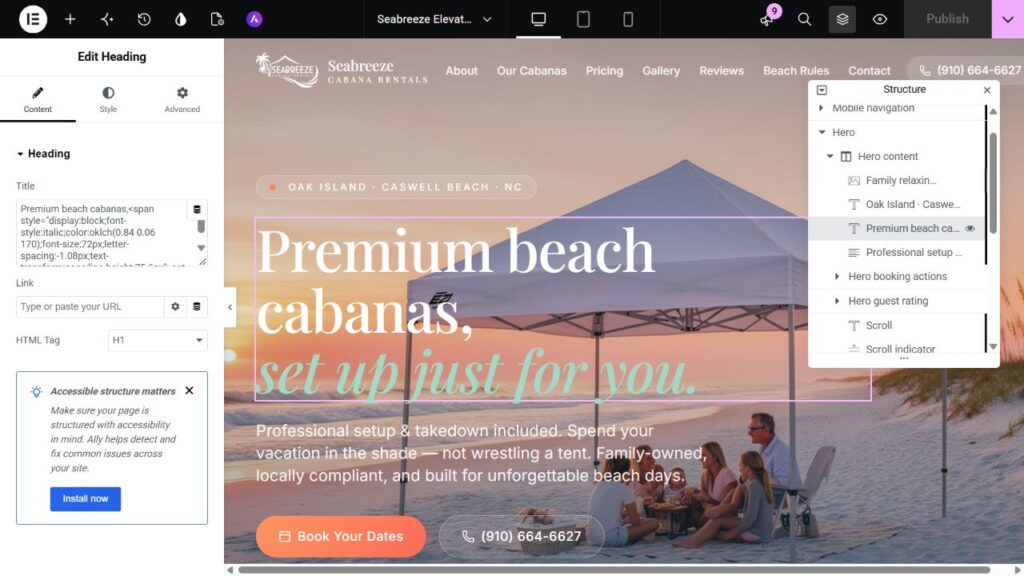
This independent demonstration rebuilds a coastal cabana-rental frontend from its public React/Lovable reference in WordPress with Elementor. The visible hero, content, imagery and booking calls to action are presentation work. It is not presented as commissioned client work. The WordPress editor capture below shows the hero H1 as a native Heading widget inside classic sections and columns. Reservation inventory, customer accounts, payment processing and operational email require separate integration and acceptance tests.
Compare the pages
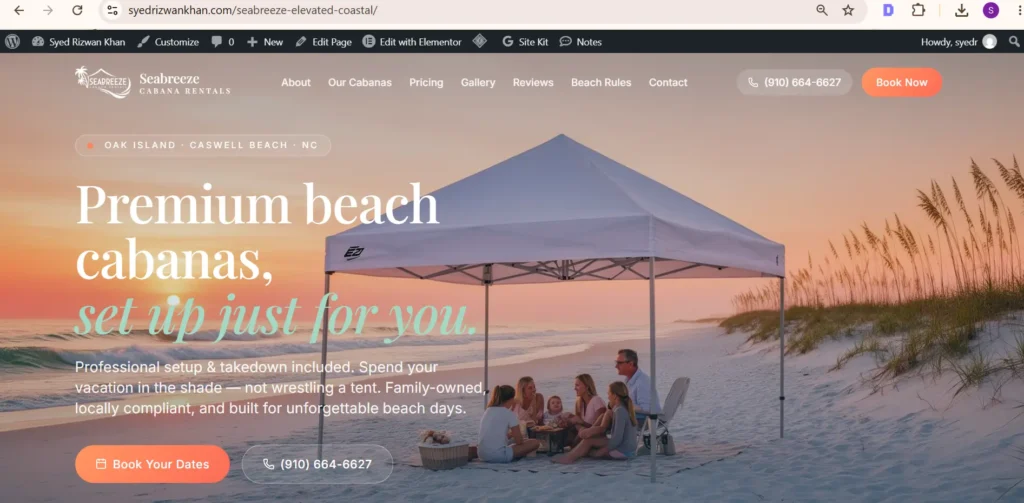
Open the React/Lovable source and open the Elementor implementation. The homepage comparison presents source-and-build imagery.
What a complete comparison should check
Observed interaction example, checked 28 October 2026: the source “Book Now” and “Book Your Dates” links lead to #pricing. Its package reservation links lead to #contact. These are navigation destinations. Clicking a booking-labelled link does not establish that a reservation or payment is processed.
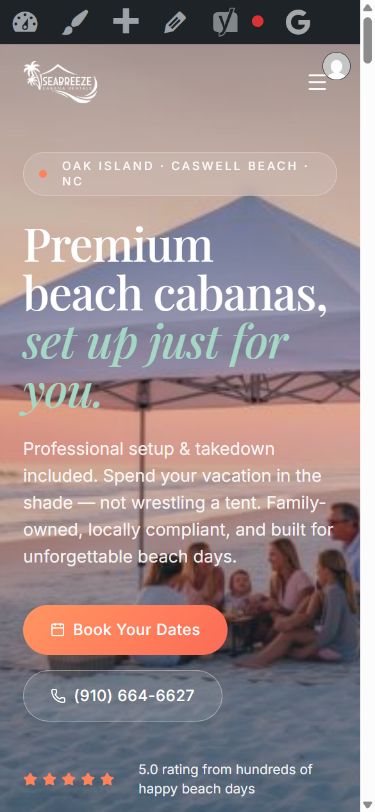
Responsive check: the published Elementor demonstration was inspected at a 390 px browser width. Its document and client widths were both 375 px after the scrollbar, with no horizontal overflow or broken completed images in that check. The mobile capture is available during a project review. This bounded check does not establish pixel-for-pixel parity across every device.
Architecture and limitations
The main implementation challenge is separating visual reconstruction from application behavior. React components and state need to be mapped to editable Elementor widgets and appropriate WordPress functionality. A page that looks similar still needs its links, forms and responsive layout checked.
- Inspect the public source and record sections, destinations and required interactions.
- Recreate editable page content in classic Elementor sections, columns and widgets.
- Compare source and build imagery, then inspect the actual editor hierarchy.
- Check responsive widths and test each business workflow separately before launch.
The public demonstration does not establish a migrated database, authenticated workflow or live booking backend. Those items belong in an agreed integration scope.
Evidence boundaries
The source link, WordPress implementation, desktop frontend image and genuine editor image are available below. A fresh mobile layout check was recorded on 28 October 2026. These establish the visible demonstration and the documented editor example. A commissioned client brief, paid engagement, complete visual-parity audit, traffic increase and conversion-rate result are not documented. No commercial outcome is attributed to this independent demonstration.
Apply the approach
Explore React-to-Elementor development or Lovable conversion. Share your source and required functionality through the inquiry section.
Have a design you need built?
Send the source design, website URL and required functionality. Scope and turnaround are confirmed after review.